EcoJust Symposium
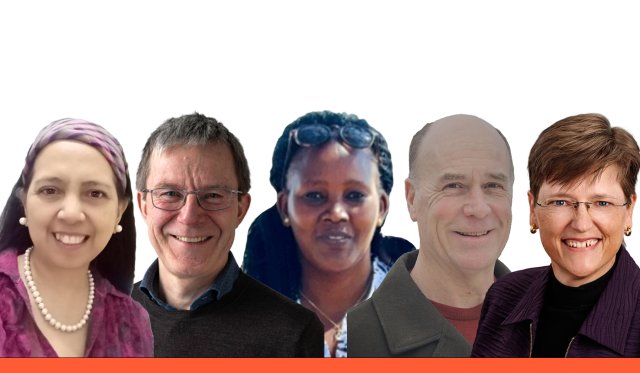
- VID Stavanger, room 261K
- April 29th 2026, 13:00 – 16:00
Registration deadline: April 23rd 2026
Many scholars wish to contribute to making the world a better place, also through their scholarship. Yet research may at times seemingly make little impact beyond closed academic circles.
Is there anything scholars can do to influence, e.g., public policy? In this symposium, the research group CollECT presents a post-doc project raising this issue, before invited panelists and the audience reflect upon this question together.
While focusing on biblical scholarship and ecojustice issues, the discussion is also relevant to anyone pondering how scholars may more efficiently engage with the “real world.” The symposium is hybrid; please sign up for free, and join us on campus or on Zoom!
Project presenter
Beth Elness-Hanson, VID Specialized University, with a presentation of her
Marie Skłodowska-Curie postdoctoral fellowship’s creation care fieldwork together with the Maasai in Tanzania.
Panelists
- Marilou S. Ibita, New Testament scholar, KU Leuven and De La Salle University, Manila, Philippines
- Tore Johnsen, World Christianity scholar and Indigenous expert, VID Specialized University, Tromsø, Norway
- Neema Kitasho, Environmental scientist and Indigenous expert, Sokoine University of Agriculture, Tanzania
- Arthur Walker-Jones, Hebrew Bible scholar, University of Winnipeg, Canada
More about the participants
Marilou S. Ibita
Ibita is a Professor at the Department of Theology and Religious Education, De La Salle University (Manila) and a Visiting Professor at the Faculty of Theology and Religious Studies, KU Leuven. At the European Association of Biblical Studies (EABS), she co-founded and co-chairs the Research Units Bible, Ecology and Sustainability and Museums and the Bible. She is a member of the Catholic Biblical Association of the Philippines Board of Trustees. She combines historical-critical methods, narrative-critical analysis, and contextual biblical hermeneutics (e.g., liberationist, feminist, postcolonial, ecological/sustainability, trauma, future-oriented, and anti-anti-Judaism) to focus
on 1–2 Corinthians and the Gospels.
Tore Johnsen
Johnsen is a contextually oriented Sámi theologian from Norway, who applies ethnographic, social science and historical approaches informed by Indigenous methodology. Johnsen is Associate Professor at VID Specialized University (Tromsø). He holds a PhD in World Christianity (2020) from the University of Edinburgh, published as the scientific monograph Sámi Nature-centered Christianity in the European Arctic: Indigenous Theology beyond Hierarchical Worldmaking (2022). Johnsen’s research interests encompass Sámi Christianity, religiosity, and worldview; lived theology, Indigenous theologies, and contextual theologies; truth and reconciliation processes in comparative perspective and reconciliation as public theology, and decolonization of Scandinavian Lutheran majority theologies.
Neema Kitasho
Kitasho is a passionate scholar of nature and people, a passion stemming from her indigenous roots. She is a lecturer at the Department of Environmental and Forest Economics at SUA, holding a PhD in environ-mental sciences from the University of Geneva. Her work is primarily dedicated to linking interdisciplinary scientific approaches with societal testimonies to understand how humans and nature can develop an eco-friendly relationship. She specializes in various research areas, including climate extremes (heat, drought), the economics of climate change, sustainable resource management, urban trees and agroforestry practices, environmental impact assessment, ecosystem services evaluation, and socio-ecological interactions. She is also deeply committed to academic mentorship and public engagement to promote environmental literacy and sustainable practices.
Arthur Walker-Jones
Walker-Jones is Professor of Religion and Culture at the University of Winnipeg, Manitoba, Canada. He has written several articles, chapters, and books on ecocriticism of the Bible, including The Green Psalter: Resources for an Ecological Spirituality (2009) and Psalms Book 2: An Earth Bible Commentary: “As a Doe Groans.” (2019). Most recently he edited, with Suzanna Miller, Ask the Animals: Developing a Biblical Animal Hermeneutic (2024). Before moving to Winnipeg, he taught for six years at Pacific Theological College, now Pasifika Communities University, in Suva, Fiji. There he was the director of Education by Extension for Development and Action and led Bible Studies at the Pacific Conference of Churches (PCC) Annual Meeting in Tahiti that were published by PCC as The Hope of the
Fenua (1997).
Beth Elness-Hanson
Elness-Hanson is currently a Marie Skłodowska-Curie Postdoctoral Fellow with a biblical- ecotheology project on creation care in Maasailand (Tanzania). Funded by the European Commission, her research is coordinated through VID Specialized University, Norway, and she was located at Tumaini University Makumira, Tanzania (2023–2025). She is on leave of absence from Wartburg Theological Seminary, Dubuque, IA, USA, where she is Associate Professor of Hebrew Bible. Her PhD (VID, 2016) and continuing research engages the intersection of Old Testament and African biblical interpretations.
Presented by
Contact person
Programme
1300: Welcome
1305-1350: Beth Elness-Hanson presents her postdoc project
1350-1400: Break
1400-1435: Panel discussion with Marilou S. Ibita, Tore Johnsen, Neema Kitasho, and Arthur Walker-Jones
1435-1445: Break and interaction
1445-1515: Discussion among panel guests and audience
1515-1525: Interaction audience
1525-1545: Open floor
1545-1600: Concluding words